Extreme Weather Preparedness - Winter Storms
What is a Winter Storm
The National Weather Service (NWS) defines a winter storm as a combination of heavy snow, blowing snow and/or dangerous wind chills. A winter storm is life-threatening.
- Extreme Cold: Winter storms can bring extreme cold conditions (link to extreme cold page) which can negatively impact individual and public health.
- Power Failures: Winter storms can cause power failures. Power failures can prevent households from regulating temperatures, and limit communication options. Power failures present an additional health risk to individuals reliant on energy-powered medical equipment.
- Driving and Transportation Risks: Winter storms present an increased risk to drivers and other commuters by causing icy, slick road conditions, snow blocks, and limited visibility.
Monitoring for Winter Storms
Keep up with winter storm activity through this NWS Winter Storm Severity Interactive Tool: Winter Storm Severity Index Web Display
The NWS issues winter storm warnings, watches, and advisories depending on severity and impendency.
Know the difference between a warning, watch, and advisory.
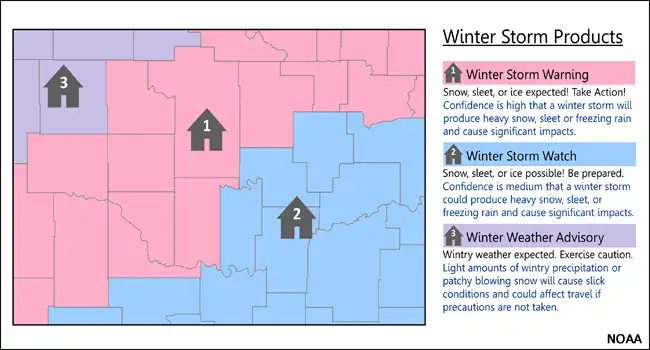
For more information on winter storm warnings, watches, and advisories, visit: Winter Weather Warnings, Watches and Advisories
Preparing Yourself and Communities for Winter Storms
Prepping you home for severe storm conditions and power outages
- Insulate any water lines along exterior walls
- Caulk and weather-strip doors and windows
- Insulate walls and attic
- Install storm or thermal-pane windows OR cover inside of windows with plastic
- Repair roof leaks
- Cut off tree branches that could fall on home or other structure during a storm
- Have chimney or flue inspected annually
- Battery operated smoke detector and carbon monoxide detector (especially if using alternative power and heat sources)
- Battery-operated flashlights or other battery powered light sources
- Surplus of additional batteries
- Consider a backup generator, especially if you or others in your household rely on energy-powered medical devices
- Backup water supply in case pipes freeze
- Backup non-perishable food supply
- Inner layer
- Choose clothing items that will hold more body heat and don’t absorb moisture: wool, silk, polypropylene (remember: cotton kills!)
- Middle or insulation layer
- Choose clothing items that retain heat by trapping air close to your body: natural fibers, like wool, goose down, or a fleece work best
- Outer layer
- Choose clothing items that help protect you from wind, rain, and snow: tightly woven, and preferably water and wind resistant, to reduce loss of body heat
For more detailed information on winter safety in the home, visit the CDC website: Safety Guidelines: During & After a Winter Storm | Winter Weather | CDC
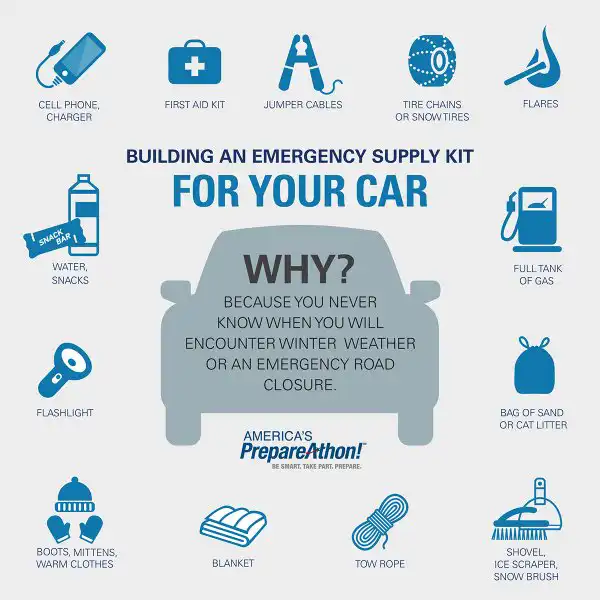
Create a car kit for winter storm emergencies
- Phone charger
- First aid kit
- Jumper cables
- Tire chains/snow tires
- Flares
- Potable water and nonperishable snacks
- Flashlight
- Blankets and warm clothes
- Tow rope
- Shovel, ice scraper, snow brush
- Sand and/or cat litter
- Full tank of gas